
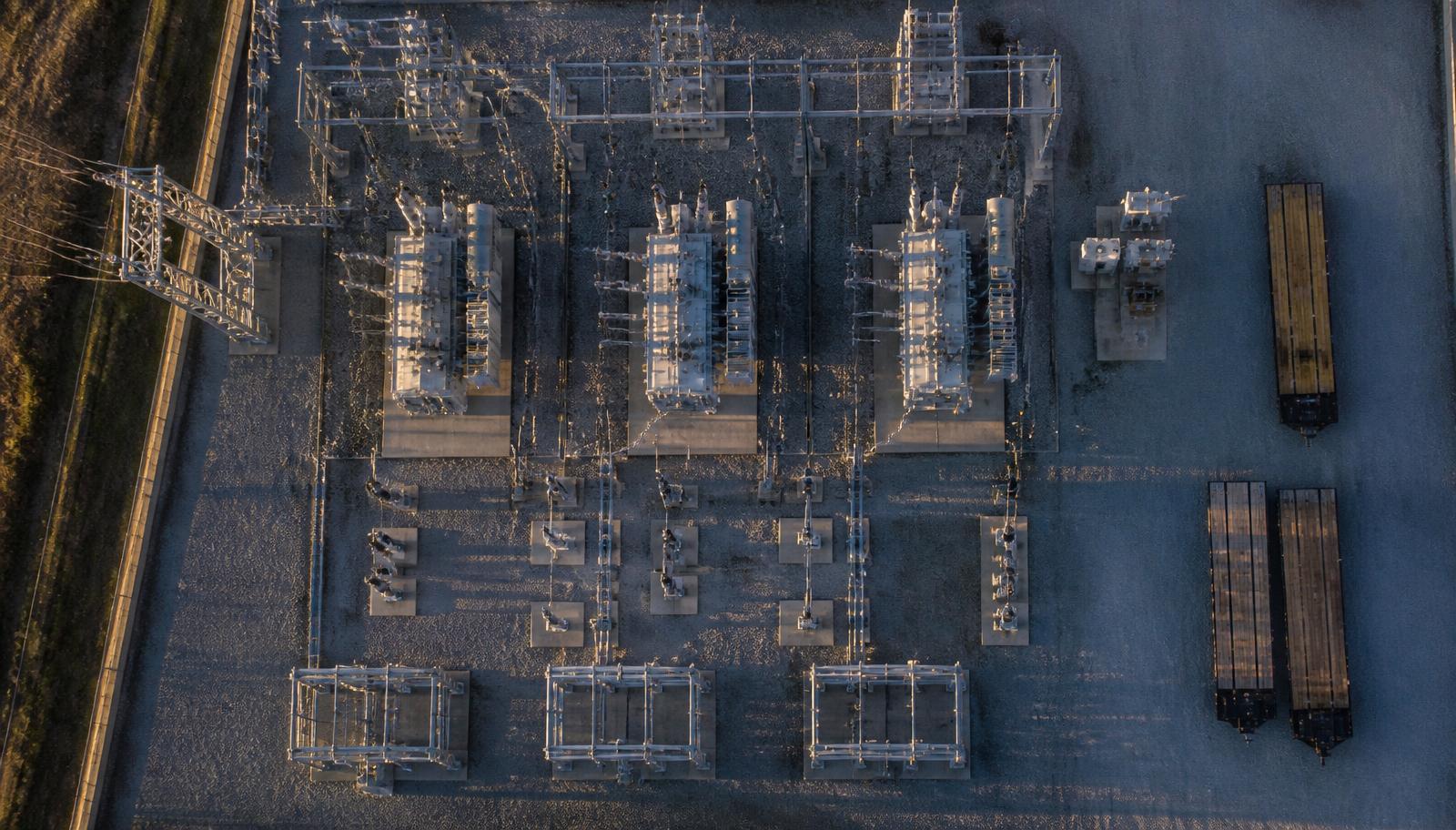
Critical Equipment Is Becoming Infrastructure's Newest Strategic Asset.
The market has spent years underwriting access to power. Increasingly, it must also underwrite the infrastructure required to deliver it.
Published by GridEQ Research · Contributors: Stephanie Cox, Kody Calkins
This month:
- Data center scrutiny is separating announced load from executable load.
- Critical equipment is becoming a form of infrastructure optionality.
- Hardware availability is moving into the investment thesis.
Opening Word
For the past several years, the energy market has chased capital, generation, interconnection, and customers. It assumed the hardware to connect it all would show up on schedule.
That assumption is falling apart.
Hyperscale AI, reshoring, and electrification are stacking new demand on a grid that's already stretched. The equipment needed to build it out (transformers, breakers, switchgear, etc) runs on a slower clock than capital markets do.
A project can check every box (land, capital, customers, a strong power strategy) and still not know when it actually turns on. Transmission capacity, substation readiness, and equipment availability increasingly decide whether the schedule holds.
For investors and infrastructure owners, that's a new layer of diligence in the investment decision.
A financeable project is not necessarily an executable project.
Market Signals & The GridEQ Take
Data Center Scrutiny Is Separating Announced Load From Executable Load
Data center demand has grown so fast that grid operators are now checking IDs at the door. Texas is the sharpest example: ERCOT is sitting on hundreds of gigawatts of proposed large-load requests, most of them data centers, while state leaders pile on scrutiny over whether that pipeline is real — see the approval pause and grid deposits in limbo.
GridEQ Take
- The pauses and audits aren't the real story.
- The real shift: the market is finally separating announced megawatts from executable megawatts.
- A large interconnection request isn't proof of project maturity anymore.
- What actually determines which projects advance: infrastructure availability, transmission requirements, equipment strategy, and execution capability.
Main Power Transformers Continue to Reshape Project Timelines
Large power transformers are still the hardest thing to buy in this industry. Lead times now blow past traditional planning cycles, so utilities and developers are scrambling for imports and factory slots just to stay in line. The same tightness runs further down the voltage stack, and manufacturers are adding domestic capacity — Hitachi Energy, Prolec GE, and Siemens.
GridEQ Take
- Transformer strategy is increasingly becoming development strategy.
- When the critical asset takes years, not months, equipment decisions can't wait behind financing and engineering anymore.
- The real question: does the physical supply chain actually support the schedule being underwritten?
The Constraint Is Broader Than Transformers
Transformers get all the attention, but they're not the whole story. Breakers, switchgear, protection systems, bus equipment: any one of them can independently stall construction or commissioning. Power companies are already scrambling to secure equipment as surging data center demand strains the system.
GridEQ Take
- The better question is no longer, “Do we have the transformer?” It is, “Is the electrical infrastructure package executable?”
- For bigger projects and portfolios, procurement diligence needs to map the whole system: component dependencies, supplier concentration, specification risk, delivery dates, and backup sourcing pathways.
A Secondary Market Is Emerging
Projects change course constantly: timelines slip, financing shifts, designs evolve, some deals die outright. Equipment bought for a schedule that no longer exists becomes surplus, even while another project waits years for the exact same gear.
GridEQ Take
- That mismatch is creating a real market for new, unused secondary equipment.
- Existence isn't the value.
- Specs, test documentation, condition, manufacturer history, warranties, and logistics decide whether inventory can be redeployed.
- The secondary market becomes valuable when it creates schedule optionality with confidence.
Hardware & Supply Chain Intelligence
Hardware Is Moving Upstream
The old sequence was simple: develop, engineer, finance, then procure. Long-lead electrical equipment is disrupting that sequence.
Now developers, utilities, and large-load operators are locking in equipment earlier, because waiting is the riskier bet. Fair, but that creates new exposure if specs, interconnection requirements, or site strategy change later.
The answer is not simply earlier procurement. It is better procurement intelligence, earlier. Sourcing or moving equipment? Start with GridEQ Exchange.
Tech & Execution Insight
Grid Capacity Is Becoming Part of Location Economics
Site selection used to run on land, labor, tax policy, and customer proximity. Now electrical infrastructure gets a seat at that table too.
What to Watch— Power availability is getting hyper-local. It's no longer “does the region have enough generation.” It's “can power reach this exact site, reliably, on this exact timeline.”
GridEQ POV: Hardware Is Becoming Part of the Investment Thesis
Capital markets have always underwritten infrastructure on economics, contracts, technology, financing, interconnection, and regulatory exposure. Still essential. But this cycle is surfacing a question that deserves more weight:
Can the project physically be delivered on the timeline being underwritten?
That sounds operational. Increasingly, it's financial. A delayed transformer can push back commercial operation. A missing breaker can stall commissioning. An unrealistic substation schedule can shift revenue. A weak procurement strategy can create cost and timing exposure across an entire portfolio.
- Critical equipment is becoming infrastructure optionality. Control qualified transformers and breakers, and one project can advance while another waits. The value isn't the price tag: it's the schedule certainty.
- Equipment constraints can become portfolio constraints. Supplier concentration, specification choices, and delivery assumptions can quietly turn into systemic exposure across an entire portfolio.
- Equipment intelligence is becoming decision intelligence. Knowing the published lead time is useful. Knowing whether the equipment plan behind a specific project is realistic is worth more.
The investment community got sophisticated at underwriting financial structures. The next edge comes from getting just as sharp on physical deliverability.
What This Means For
- Financial Institutions & Investors: Add physical deliverability to diligence. Equipment strategy, infrastructure readiness, and procurement assumptions now decide whether a schedule can be underwritten with confidence.
- Independent Power Producers: Treat long-lead equipment as a portfolio issue, not a project issue. Supplier diversification and equipment optionality reduce exposure as pipelines scale. Start with GridEQ Exchange.
- Developers: Let hardware realities shape sequencing earlier. The most valuable project in your pipeline isn't always the one with the best modeled return. It's the one with the clearest path to execution.
- Data Center & Large Load Developers: Securing megawatts isn't a power strategy, it's step one. Transmission availability, substation readiness, and equipment access decide whether announced capacity ever becomes operating capacity. Start with GridEQ Exchange.
- Utilities: This load growth doesn't get managed without tighter coordination: planning, procurement, manufacturers, developers, and large customers, all in sync.
- OEMs & Equipment Suppliers: Customers now weigh delivery certainty and transparency right alongside performance and price.
Closing Word
Infrastructure markets are very good at creating financial abstractions: megawatts of pipeline, gigawatts of demand, capital committed, expected commercial operation dates. Eventually, every one of those abstractions has to become something physical.
Steel has to be manufactured. Transformers have to be built and transported. Breakers have to arrive. Substations have to be engineered. Transmission has to exist. People have to commission the system.
Because the next infrastructure winners will not simply be the organizations with the largest pipelines.
They will be the ones with the clearest path from capital to operation.
The next 90 days are about closing that distance. Start with GridEQ Exchange.
Why It Matters
- Data center development is forcing the market to distinguish between announced demand and executable demand.
- Critical electrical equipment is increasingly influencing project schedules, sequencing, and capital decisions.
- Transformer constraints are only one part of a broader electrical infrastructure challenge.
- Secondary markets can create valuable equipment optionality when inventory is properly qualified.
- Physical deliverability is becoming part of the infrastructure investment thesis.
Need to source or move critical equipment?
Sources
- Reuters — Texas governor orders pause on new data center approvals pending audit
- Reuters — Hundreds of millions in Texas grid deposits linger in uncertainty
- Reuters — U.S. power companies scramble to secure equipment as data center demand surges
- Reuters — U.S. power transformer buyers scramble for imports and factory slots
- U.S. Department of Energy — Distribution transformer supply-chain constraints (RFI)
- Hitachi Energy — $457M large power transformer manufacturing facility, South Boston, Virginia
- Prolec GE Waukesha — Major U.S. transformer manufacturing expansion, Wayne County
- Siemens — U.S. electrical-infrastructure manufacturing investment (August 2026)