
Three Bids Can Still Share One Bottleneck.
Having multiple equipment suppliers doesn't necessarily mean you have a diversified supply chain. The real question is whether those suppliers depend on the same critical components.
Published by GridEQ Research · Contributors: Stephanie Cox
This month:
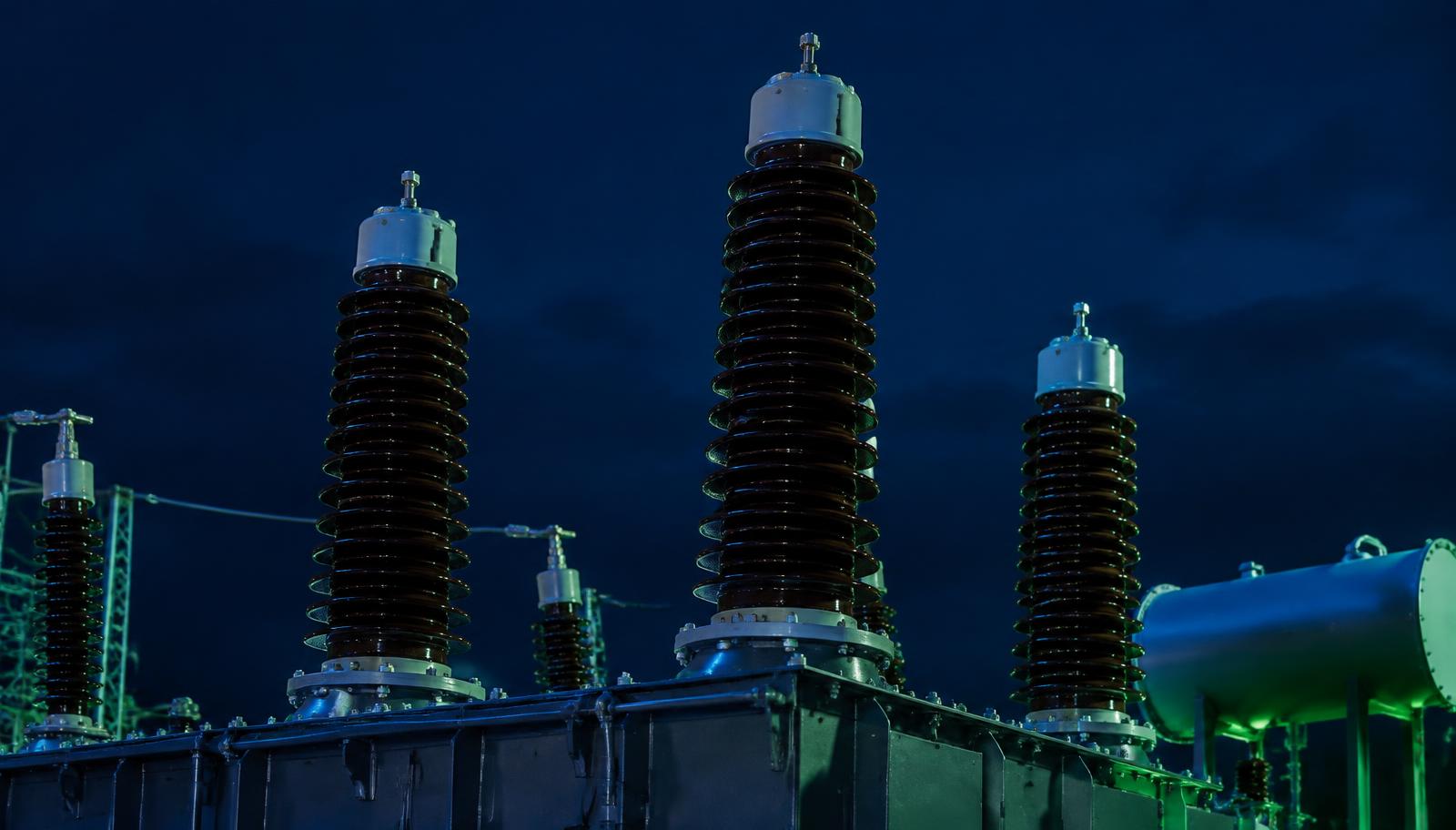
- GE Vernova is paying $9 billion to own a supplier of bushings, a part worth 5% to 8% of a transformer's bill of materials. A single critical component can determine when an entire transformer is delivered.
- Washington is expanding support for substitute materials and equipment reuse, not just more factories. Addressing equipment shortages increasingly means looking beyond manufacturing capacity to the components and materials behind it.
- Data centers are redesigning the power path itself. New technologies may change how power is distributed, but they don't necessarily solve upstream grid constraints.
Opening Word
For two years, the transformer conversation has been about factories: who has slots and who ships first. October moved it one layer down.
GE Vernova agreed to buy grid-component maker Trench Group for $9 billion. DOE opened $237 million for alternative materials, subcomponents, and reuse. A data center developer reserved over a gigawatt of solid-state transformers to rework the power path.
One of the things we believe the industry needs to pay closer attention to is what actually sits behind an equipment quote. You may have three different OEMs bidding on a transformer, but if all three depend on the same critical component supplier, how much have you really diversified your risk? The number of suppliers matters far less than understanding whether they offer genuinely different paths to delivery.
Market Signals & The GridEQ Take
1. A $9 billion move upstream.
On October 28, GE Vernova agreed to acquire Trench Group, describing the deal as vertically integrating "an existing supplier" of bushings, instrument transformers, and coils; closing is expected in late 2027 (GE Vernova; Trench Group). CEO Scott Strazik told investors GE Vernova buys most of its bushings externally, that they run 5% to 8% of a transformer's bill of materials, and that customers often specify the bushing maker (ENR). Trench also lists 765 kV bushing supply agreements with HICO, Pennsylvania Transformer, and Hyundai Power Transformers USA (Trench Group).
GridEQ Take
- After closing, those transformer makers would buy a critical part from a GE Vernova company. Confirm component commitments in your own contract.
- If buyers specify the bushing, their own spec can tie several OEM bids to one component maker.
2. Washington is putting more money into inputs, not just factories.
DOE's $237 million Grid SCALED opportunity, opened October 30, builds on earlier Office of Electricity work: up to $187 million for U.S.-made alternative materials and subcomponents and up to $50 million for refurbishment and reuse, with concept papers due November 20 (DOE).
GridEQ Take
- Federal policy treats a transformer as a stack of dependencies. Procurement should too.
- Refurbished, used, and new and unused carry different qualification burdens. Keep them separate in bids and credit memos.
3. Conventional capacity is growing, one product line at a time.
Niagara Power Transformer broke ground October 22 on a more-than-$71 million expansion it says will lift capacity 50% for large liquid-filled power and specialty transformers. The release gives no ramp date or MVA figure and notes Quanta Services recently acquired the company (New York State).
GridEQ Take
- Additional manufacturing capacity is encouraging, but it doesn't automatically translate into shorter lead times for every project. What matters is whether that capacity supports the specific equipment configuration and delivery timeline a project actually requires. We're also seeing greater vertical integration across the industry, with companies looking to control more of the manufacturing and component supply chain rather than relying entirely on external suppliers.
4. Data centers are changing the equipment list, not the vendor list.
On October 21, Vantage secured more than 1 GW of manufacturing capacity for Heron Power's Heron Link, a solid-state transformer that converts medium-voltage power directly to 800 VDC with integrated storage (Heron Power; DCD). Efficiency above 98.5% is a target, not a fleet result.
GridEQ Take
- The architecture does not, by itself, remove upstream utility capacity or interconnection constraints.
- Compare whole systems, not unit prices.
Hardware & Supply Chain Intelligence
When someone quotes a transformer delivery date, how often are we asking what actually supports that timeline?
Is the manufacturer waiting on bushings? Are those components already allocated? Are alternate suppliers approved? And if one component is delayed, what does that do to the overall delivery schedule?
A transformer bid shows a delivery date, rarely what the date depends on. A DOE-sponsored national laboratory report, drawing on industry interviews, says bushings and on-load tap changers are now "the biggest risks in the market," with 345 kV bushings taking more than 130 weeks and no domestic 765 kV supplier (National Laboratory of the Rockies). GE Vernova expects Charlotte's 765 kV manufacturing to begin in late 2027; Trench lists first 765 kV deliveries in early 2028 (GE Vernova; Trench Group).
So ask every bidder: which bushing maker and model is specified, are alternates approved, who can authorize a swap, and what retesting would it trigger? Two bids naming the same bushing supplier may share one bottleneck. Check the plant, allocation, and inventory before counting them twice.
A complete new and unused unit with its specified bushings available can avoid a fresh component queue, subject to condition, compatibility, testing, and acceptance. Value it against the dependency it avoids. Sourcing or moving equipment? Start with GridEQ Exchange.
Tech & Execution Insight
Heron says Heron Link lets developers connect to medium voltage "without a transformer" (Heron Power). It's an interesting development, but the distinction matters. The technology changes certain power conversion and distribution requirements within the data center. It does not eliminate the need for upstream utility infrastructure. What goes away is the medium-to-low-voltage step-down and 480 VAC distribution inside the campus. What needs diligence instead: semiconductor supply, firmware support, spares, and field service from a company founded in 2024 (DCD).
What to Watch: The first independently documented, customer-accepted Heron Link deployment, with real commissioning time, efficiency at load, and a named spares model.
GridEQ POV: Count Supply Routes, Not Supplier Logos
A diversified shortlist protects the schedule only if its bids would fail for different reasons. October exposed the layers beneath a quote: component ownership, contractor ownership, substitute materials, and new architectures.
- Understand what's behind each bid before comparing them. For each bid, name the component likely to set the date, its maker, and who approves an alternate.
- A different OEM doesn't always mean a different supply chain. Another OEM, a new and unused unit, a refurbished unit, and a new architecture each remove a different constraint and add their own qualification work.
- Price the constraint removed, not the shortage headline. An alternative is worth the specific dependency it avoids, net of the review and retesting it still needs.
- Rewrite specs that create single points of failure. Where engineering allows, pre-approve alternate component sources.
Greater vertical integration isn't necessarily a negative development. In many cases, having more control over the supply chain can improve coordination, manufacturing efficiency, and delivery certainty.
But that doesn't mean buyers should assume every supplier offers an independent path to delivery. Nor should different equipment alternatives be treated as interchangeable. A new and unused transformer, a refurbished unit, and an emerging technology each carry different technical, commercial, and qualification considerations.
The goal is to understand those differences early enough that they inform the procurement strategy, rather than becoming a problem when the project is already counting on a delivery date.
If your top-ranked bid lost its critical component for six months, would your second bid still deliver?
What This Means For
- Financial Institutions & Investors: Test whether a "diversified" equipment plan has independent component paths. Announced capacity isn't supply.
- Independent Power Producers: Flag where one specified component source sits behind several projects.
- Developers: Name the constraining component and its alternates before ranking bids.
- Data Center & Large Load Developers: Judge 800 VDC designs at the boundary they change. Upstream utility capacity is a separate problem.
- Utilities: Reevaluate component specifications where engineering allows to determine whether approved alternatives could reduce unnecessary supply constraints.
- OEMs & Equipment Suppliers: Disclose component sourcing and substitution rights. Buyers pay for transparency around component sourcing.
Closing Word
There is a lot of encouraging investment happening across the grid equipment supply chain. New factories, greater manufacturing integration, and emerging technologies all have the potential to improve how quickly we can deliver critical infrastructure.
But one area the industry needs to improve is looking beyond the equipment manufacturer and understanding the full supply chain behind a delivery commitment.
At the end of the day, a transformer is only as deliverable as the components required to build it. And having multiple suppliers doesn't necessarily protect your schedule if they all depend on the same constrained inputs.
As we head into 2027, the advantage won't simply be having more equipment options. It will be understanding which options provide a different, credible path to execution.
A shortlist is only as diversified as its least visible component.
To map the dependencies behind a live bid, talk to GridEQ.
Need to source or move critical equipment?
Sources
- GE Vernova: GE Vernova to Acquire Trench Group (Oct. 28, 2026)
- Trench Group: Trench Group Enters Its Next Chapter with GE Vernova as New Owner (Oct. 28, 2026)
- Trench Group: Trench Group Commits to America's Grid Transformation (May 4, 2026; background)
- Engineering News-Record: GE Vernova's $9B Planned Buy of Trench Group Targets Grid Equipment Crunch (Oct. 28, 2026)
- U.S. Department of Energy: Energy Department Announces Over $230 Million Funding Opportunity to Strengthen America's Grid Supply Chain and Lower Electricity Costs (Oct. 30, 2026)
- U.S. Department of Energy, Office of Electricity: Innovative Solutions for Grid Equipment Shortages (Oct. 26, 2026)
- Office of the Governor of New York: Governor Hochul Announces Groundbreaking of Niagara Power Transformer's More Than $71 Million Expansion to Support Grid Modernization (Oct. 22, 2026)
- National Laboratory of the Rockies (for DOE): Large Power Transformer Supply Chain Gap Analysis and Domestic Content Strategies for Hydropower Rehabilitation: Supplemental Report (FY2026; background)
- Heron Power Electronics: Vantage and Heron Power Electronics Announce Gigawatt-Scale 800 VDC Agreement to Accelerate AI Infrastructure Delivery (Oct. 21, 2026)
- Data Center Dynamics: Vantage Signs 1GW Solid-State Transformer Supply Deal with Heron Power (Oct. 21, 2026)